Harlem: 1920's Black Art & Literature
This is one of the classes I'm taking at Columbia this summer. It is taught by Marya Patrice Smith. I thought this would be a fun class. The Cotton Club, zoot suits, Duke Ellington, etc. This will be a blast. I love the time period, I love the music, I love black people. Let's party!
Once, again, I was in for a wake-up call. Marya (pronounced like Mariah) loves to teach. She's not your standard lecture and regurgitate kind of instructor. Hers' is experiential. She expects us to engage and participate in the course. She expects us to wake up to what The Harlem Renaissance was really about. She inspires me to use italics, a lot.
I left the first class stunned and glad I enrolled.
Here's a few nuggets I learned...
- The Harlem Renaissance was not an art movement. It was a consciously generated social movement. A social movement created by people tired of living in fear at the mercy of people who didn't see them as anything more than animals. Their goal in creating the movement was to be seen for their humanity. Their tool was art. Their target was white America. So, was it art or propaganda?
- From 1897 - 1907, there were 3,000 documented lynchings of black men, women and children. In 1919, during what became known as Red Summer, 643 lynchings occurred. Again, well-documented, with little or no repercussion to the perpetrators. These lynchings were well documented, because people took pictures. There are plenty of group photos that look like fishermen proudly standing next to their catch of the day.
- Most of the lynchings occurred in the north. In 1919, Red Summer began in Chicago because a black child went for a swim in Lake Michigan off the wrong part of the beach.
- The Cotton Club modeled itself after southern plantations. The servers were dressed like slaves. All the help and the entertainers were black. All the clientele were white. Blacks were not allowed in The Cotton Club unless they were hired to be there. And even then, only light-skin blacks. Louis Armstrong was not allowed to play there. Near the end of The Cotton Club's hey day, blacks were allowed in. They had to pay more than whites for entrance and had to sit in a segregated area.
It's funny how nostalgia works in this country. I find myself nostalgic for time periods I didn't even live in. I thought it would be fun to live in the 1920's. We remember only the good times or, at least, what we were told were the good times. This class is all about context.
And I feel like it's going to be like my Contemporary European Nationalism and Ethnic Conflict class where it's going to bum me out a lot on the road to being enlightened.
Congratulations to my good friends Pete Ficht and Paul Custodio who have put together a site called The Graffiti Table. I wish they were my teachers. Sometimes I think I'd much rather be studying about female streakers, pot brownie etiquette and running quality diagnostics on aging bands.

satire, social commentary, sketch comedy, writing, stuff
Tuesday, May 22, 2007


Monday, May 21, 2007
The Danger of Experience
I have a very odd schedule. I almost never have a clear, consistent "x" amount of days off. When The Second City Training Center is between terms, I'm teaching at Columbia College. When Columbia is on break, I'm at Second City. Last week was the unusual harmonic alignment of both Second City and Columbia being on break for one week both at the same time. And I still ended up at Second City on four of those days. Not complaining, though. I love what I do. I have two Writing 5 shows opening next Friday, so I had extra rehearsals with them. And I picked up teaching an Adult Weekend Workshop. This is where a group of grown-ups come in to Second City, usually from out of town, and take improv classes in the morning and writing classes in the afternoon.
I love teaching these, especially when the improv teacher is someone of strong caliber. This time, it was Bina Martin, who's an excellent teacher. Without intentionally sitting down and working it out, both our curricula dove-tailed nicely into one another. I was able to build on whatever she did in the morning and she was able to continue the work the next day. Improv and sketch writing have a lot in common. The elements that make an improvised scene work will also make a written scene work.
While I love teaching these workshops, there's an element of trusting everything will work out that's required by me and the students. Most the students come in with high expectations that a brief weekend just won't fulfill. I usually tell the students that I'll be covering a lot of ground over the three two-and-a-half hours that we're together and if one-fourth of it sticks, we did a good a job. The workshop is essentially Second City's eight-week Intro to Comedy Writing smashed into seven-and-a-half hours.
I have noticed that the majority of these workshops tend to be populated by two types of students: writers experienced in another medium and members of a comedy group from another state. This time, there were five older ladies who were experienced authors, mostly romance novels and children's books. Another three or four students were from a Baltimore/D.C. group called The Comedy Pigs.
Here's the danger of working with students from either category...
- They've had enough success through bad habits that it's hard for them to be open to trying a new way.
- They're so preoccupied in showing me that they're just not some other student, but someone who doesn't really need the class, that they miss a lot of the value available. Instead of learning, they're looking for validation for what they already do and know.
- They talk too much. They spend a lot of time relating their own experience or giving wizened feedback to their classmates. They forget they came to be a student.
These are extreme examples and while this past weekend had some flavoring of this, it was really a great group to teach. The folks from Pigs were especially eager to learn and absorb as much as they could from being in Chicago and at Second City. But there was one woman who on the first day was resistant to what was happening in the workshop. She never said it directly. She expressed this through loud sighs, not writing during the writing exercises and whispering to her friend when the focus should have been elsewhere. Bina had similar issues with her non-participation participation. Not surprisingly, she also seemed to be the most experienced writer in the group. I believe she's had seventeen books published. To her credit, she got better each day. And by that I mean, quieter and actually did most of the work we did in class. Again, not surprisingly, her writing assignment on the third day was among the weakest in the class, which were generally pretty good.
This isn't a story about me reaching out to her and connecting and turning her around. I don't have the time and, quite frankly, I'm not interested. If someone already has their brain locked into being miserable, there's not much I can do or care to do, especially in a brief workshop. Had this been a full-term class, I might have had a conversation with her, but she likely would have dropped out after the first class. I'd rather focus on the students who are hungry to learn and fold this experience back into whatever their goals are as a writer. Unlike our president, I believe there is such a thing as a lost cause.
If you're going to take a class, especially as an adult, be a good student. I enjoy taking classes. I enjoy learning and growing (I start two new classes at Columbia this week - Harlem in the 1920's and French I). It expands my abilities not only as an artist, but as a human being. I'm a good student. I'm attentive, I'm curious and I'll give it a try. I empower my teachers. And here's something I know, things almost always go the way you think they will. If you think you're not going to get value out of a class you're in, you're probably right. It's up to you to take responsibility for your own experience.
I love teaching these, especially when the improv teacher is someone of strong caliber. This time, it was Bina Martin, who's an excellent teacher. Without intentionally sitting down and working it out, both our curricula dove-tailed nicely into one another. I was able to build on whatever she did in the morning and she was able to continue the work the next day. Improv and sketch writing have a lot in common. The elements that make an improvised scene work will also make a written scene work.
While I love teaching these workshops, there's an element of trusting everything will work out that's required by me and the students. Most the students come in with high expectations that a brief weekend just won't fulfill. I usually tell the students that I'll be covering a lot of ground over the three two-and-a-half hours that we're together and if one-fourth of it sticks, we did a good a job. The workshop is essentially Second City's eight-week Intro to Comedy Writing smashed into seven-and-a-half hours.
I have noticed that the majority of these workshops tend to be populated by two types of students: writers experienced in another medium and members of a comedy group from another state. This time, there were five older ladies who were experienced authors, mostly romance novels and children's books. Another three or four students were from a Baltimore/D.C. group called The Comedy Pigs.
Here's the danger of working with students from either category...
- They've had enough success through bad habits that it's hard for them to be open to trying a new way.
- They're so preoccupied in showing me that they're just not some other student, but someone who doesn't really need the class, that they miss a lot of the value available. Instead of learning, they're looking for validation for what they already do and know.
- They talk too much. They spend a lot of time relating their own experience or giving wizened feedback to their classmates. They forget they came to be a student.
These are extreme examples and while this past weekend had some flavoring of this, it was really a great group to teach. The folks from Pigs were especially eager to learn and absorb as much as they could from being in Chicago and at Second City. But there was one woman who on the first day was resistant to what was happening in the workshop. She never said it directly. She expressed this through loud sighs, not writing during the writing exercises and whispering to her friend when the focus should have been elsewhere. Bina had similar issues with her non-participation participation. Not surprisingly, she also seemed to be the most experienced writer in the group. I believe she's had seventeen books published. To her credit, she got better each day. And by that I mean, quieter and actually did most of the work we did in class. Again, not surprisingly, her writing assignment on the third day was among the weakest in the class, which were generally pretty good.
This isn't a story about me reaching out to her and connecting and turning her around. I don't have the time and, quite frankly, I'm not interested. If someone already has their brain locked into being miserable, there's not much I can do or care to do, especially in a brief workshop. Had this been a full-term class, I might have had a conversation with her, but she likely would have dropped out after the first class. I'd rather focus on the students who are hungry to learn and fold this experience back into whatever their goals are as a writer. Unlike our president, I believe there is such a thing as a lost cause.
If you're going to take a class, especially as an adult, be a good student. I enjoy taking classes. I enjoy learning and growing (I start two new classes at Columbia this week - Harlem in the 1920's and French I). It expands my abilities not only as an artist, but as a human being. I'm a good student. I'm attentive, I'm curious and I'll give it a try. I empower my teachers. And here's something I know, things almost always go the way you think they will. If you think you're not going to get value out of a class you're in, you're probably right. It's up to you to take responsibility for your own experience.
Saturday, May 19, 2007
Saturday Morning Cartoons!
Columbia College: My grades came in from both my history class and biology class. I got "A's" in both! That hasn't happened since my first quarter at Wright State University. Then I discovered a social life and it all plummeted from there. Unfortunately, being a part-time student, I don't get on the Dean's List. However, I found this other guy named Dean that I'm hoping will put me on his list.
SATURDAY MORNING CARTOONS!
Grab a bowl of Frosted Flakes, pour too much milk (soy) into it and sit your butt on a pillow in front of the screen! Last week's was a sketch by Peter Cook and Dudley Moore making fun of an old TV show called Thunderbirds Are Go!
This week, it's the real deal with Gumby and Pokey!

SATURDAY MORNING CARTOONS!
Grab a bowl of Frosted Flakes, pour too much milk (soy) into it and sit your butt on a pillow in front of the screen! Last week's was a sketch by Peter Cook and Dudley Moore making fun of an old TV show called Thunderbirds Are Go!

This week, it's the real deal with Gumby and Pokey!
Friday, May 18, 2007
Fry Day
RoboWriters met last night. Again, I am blown away by the level of quality and creativity. I threw everyone a curve by bringing in a scene that had a serious tone. I probably should have warned them. As we were reading the scene, they were waiting for the big laugh to come in. Sorry, no donkeys, no strap-ons, no retarded robot pirates. The recurring theme in last evening's feedback was "character." There were a few scenes read where the most interesting characters weren't the ones the the scene was about. Tell a good story, yes, but what helps make a good story are characters you care about. Not just from the audience's perspective, from your perspective as the author. Write characters that interest you. You like vampires? Great, write about vampires. Or give one of your characters vampire-like qualities. You're the one creating a world, make sure it's a place you want to spend time in. You do that by making sure it's populated with people you want to spend time with.
ROBOWRITERS ASSIGNMENT FOR NEXT WEEK: Go to a place in public, like a coffee shop or a park, where you can sit and free write (pen to paper without stopping) for at least ten minutes. Free write about the environment around you and the people around you. Do this three times over the next three days. Develop a scene based on your observations. Develop a scene based on your observations.. I also challenged the 8pm-10pm group to make it a ten-page scene (and justify the length! No padding!).
MOM UPDATE: The doctors didn't find anything with the MRI, which I guess is good news. They kept her overnight and she should be going back to the nursing home today.
COLUMBIA UPDATE: I got an "A" in Biology! Somebody owes me an ice-cream cone. Non-dairy.
AL GORE: I'm glad we were smart enough to elect him president in 2000. I wish we had been smart enough to allow him to serve. Here's an except from an excerpt from his latest book, The Assault on Reason...
The entire excerpt can be read at Time Magazine.It is simply no longer possible to ignore the strangeness of our public discourse. I know I am not alone in feeling that something has gone fundamentally wrong. In 2001, I had hoped it was an aberration when polls showed that three-quarters of Americans believed that Saddam Hussein was responsible for attacking us on Sept. 11. More than five years later, however, nearly half of the American public still believes Saddam was connected to the attack.
At first I thought the exhaustive, nonstop coverage of the O.J. Simpson trial was just an unfortunate excess—an unwelcome departure from the normal good sense and judgment of our television news media. Now we know that it was merely an early example of a new pattern of serial obsessions that periodically take over the airwaves for weeks at a time: the Michael Jackson trial and the Robert Blake trial, the Laci Peterson tragedy and the Chandra Levy tragedy, Britney and KFed, Lindsay and Paris and Nicole.
While American television watchers were collectively devoting 100 million hours of their lives each week to these and other similar stories, our nation was in the process of more quietly making what future historians will certainly describe as a series of catastrophically mistaken decisions on issues of war and peace, the global climate and human survival, freedom and barbarity, justice and fairness. For example, hardly anyone now disagrees that the choice to invade Iraq was a grievous mistake. Yet, incredibly, all of the evidence and arguments necessary to have made the right decision were available at the time and in hindsight are glaringly obvious.
I'm not always the biggest fan of SNL, but I did think they got this right back in 2000 when the presidency was still up for grabs. It's a speculation on what a Bush or Gore presidency would be like shortly after they take office.
The only thing they got wrong is that Bush would have been in deep arrogant denial about things falling apart around him.
Thursday, May 17, 2007
Dada Writing Lesson
Last night was my last Dada writing session with WNEP for awhile. There's another one scheduled for Memorial Day Weekend, but I will be in Ohio visiting my mother.
We read a lot of stuff, but also worked on new material. Steve, the assistant director, had us do two brief sessions of free writing.
Free writing is where you simply put pen to paper and keep writing, nonstop, for a set amount of time. The purpose is to just unload whatever is happening in your head. I used to hate free writing. It seemed pointless to me to write something that didn't have a clear intention and wasn't meant to be read by others. It took an improv class to turn me on to the benefits of free writing.
A few years ago, I took Andy Eninger's Sybil "solo improvisation" class. As someone who's been around the improv scene for quite awhile, it's hard to find class situations that will be challenging. Andy's probably the best at performing this intimidating form, but he's also a fun guy and a great teacher. He knows how to take some of the pressure off. One of the techniques he encouraged was my mortal enemy - free writing. His argument was that anywhere from 10 - 30 minutes of free writing would help scratch the surface of your subconscious and help you flow more in your solo improvisation. I did it diligently, before every class and before every performance. The bastard was right. Now, I preach it in my writing classes for the same reason. Especially if you don't have anything to write about, free writing helps bring topics that are already going on in your head to the forefront.
So, last night. We did some free writing and then Steve had us write a poem developed from what we wrote. Here's my poem...
Remember, read it out loud with an affected German accent. A little panic in your voice will also be helpful.
THE LAST NIGHT
by dada mondo yippeeeeeee
It's funny. Last night, while you were upstairs...
I became afraid...
I am always afraid.
I am afraid of being attacked.
I am afraid of being provoked.
I am afraid I will have to excuse myself to go to the toilet (again).
At a certain point, I...
I am afraid I may vomit uncontrollably.
I am afraid I ate my supper too quickly - chewing little, swallowing lots.
I am afraid I will sneeze or cough or choke or fart loudly
It's funny. Last night, while you were upstairs...
(dada walks offstage. offstage we hear painful moaning sounds that may or may not be associated with relieving oneself. dada walks back on stage.)
It's funny. Last night, while you were upstairs...
I became afraid.
I came into the dining room. Is there any wine?
I am afraid I will die before I am through.
I am afraid I will not die after I am through and will spend several decades twiddling my one arthritic thumb with my one orthopedic thumb.
I guess you heard me because...
You know.
You know.
You know I am afraid of forgetting and never remembering.
I am afraid of breaking. I am afraid of breaking my jaw, my nose, my kneecaps. I am afraid of bones snapping, organs failing, fluids leaking and gums rotting.
It's funny. Last night, while you were upstairs...........................................................
...................................................................
...................................................................
..............................what the hell was I saying?
RoboWriters: Meets tonight from 6pm - 8pm at The Uptown Writer's Space. It's only five bucks. Bring something to read.
Mom Update: My mother is still at St. Vincents Hospital in Toledo, Ohio. She had a MRI on Monday and, as of Wednesday, has not received any results from it. I spoke to her on the phone and she's sounding and feeling better. She talks about food a lot. As do I.
Joe Update: I fired myself from my job of waking up my girlfriend on weekday mornings. For the second time this week, I was late. You see, my cats used to have the job of waking me up. I fired them when they started to push the wake-up time earlier and earlier, sometimes at 4:30am! I'm usually very reliable at waking up on my own at the time I want, but this morning I was deep in a dream connecting Lincoln's assassination with the Dutch Mafia. I'll let you know if that theory pans out for me and was worth making my girlfriend late for work.
Cystic Fibrosis: Jeri, my friend from college, has some beautiful kids that suffer from this awful disease. If you have a moment, check out her message...
We read a lot of stuff, but also worked on new material. Steve, the assistant director, had us do two brief sessions of free writing.
Free writing is where you simply put pen to paper and keep writing, nonstop, for a set amount of time. The purpose is to just unload whatever is happening in your head. I used to hate free writing. It seemed pointless to me to write something that didn't have a clear intention and wasn't meant to be read by others. It took an improv class to turn me on to the benefits of free writing.
A few years ago, I took Andy Eninger's Sybil "solo improvisation" class. As someone who's been around the improv scene for quite awhile, it's hard to find class situations that will be challenging. Andy's probably the best at performing this intimidating form, but he's also a fun guy and a great teacher. He knows how to take some of the pressure off. One of the techniques he encouraged was my mortal enemy - free writing. His argument was that anywhere from 10 - 30 minutes of free writing would help scratch the surface of your subconscious and help you flow more in your solo improvisation. I did it diligently, before every class and before every performance. The bastard was right. Now, I preach it in my writing classes for the same reason. Especially if you don't have anything to write about, free writing helps bring topics that are already going on in your head to the forefront.
So, last night. We did some free writing and then Steve had us write a poem developed from what we wrote. Here's my poem...
Remember, read it out loud with an affected German accent. A little panic in your voice will also be helpful.
THE LAST NIGHT
by dada mondo yippeeeeeee
It's funny. Last night, while you were upstairs...
I became afraid...
I am always afraid.
I am afraid of being attacked.
I am afraid of being provoked.
I am afraid I will have to excuse myself to go to the toilet (again).
At a certain point, I...
I am afraid I may vomit uncontrollably.
I am afraid I ate my supper too quickly - chewing little, swallowing lots.
I am afraid I will sneeze or cough or choke or fart loudly
It's funny. Last night, while you were upstairs...
(dada walks offstage. offstage we hear painful moaning sounds that may or may not be associated with relieving oneself. dada walks back on stage.)
It's funny. Last night, while you were upstairs...
I became afraid.
I came into the dining room. Is there any wine?
I am afraid I will die before I am through.
I am afraid I will not die after I am through and will spend several decades twiddling my one arthritic thumb with my one orthopedic thumb.
I guess you heard me because...
You know.
You know.
You know I am afraid of forgetting and never remembering.
I am afraid of breaking. I am afraid of breaking my jaw, my nose, my kneecaps. I am afraid of bones snapping, organs failing, fluids leaking and gums rotting.
It's funny. Last night, while you were upstairs...........................................................
...................................................................
...................................................................
..............................what the hell was I saying?
RoboWriters: Meets tonight from 6pm - 8pm at The Uptown Writer's Space. It's only five bucks. Bring something to read.
Mom Update: My mother is still at St. Vincents Hospital in Toledo, Ohio. She had a MRI on Monday and, as of Wednesday, has not received any results from it. I spoke to her on the phone and she's sounding and feeling better. She talks about food a lot. As do I.
Joe Update: I fired myself from my job of waking up my girlfriend on weekday mornings. For the second time this week, I was late. You see, my cats used to have the job of waking me up. I fired them when they started to push the wake-up time earlier and earlier, sometimes at 4:30am! I'm usually very reliable at waking up on my own at the time I want, but this morning I was deep in a dream connecting Lincoln's assassination with the Dutch Mafia. I'll let you know if that theory pans out for me and was worth making my girlfriend late for work.
Cystic Fibrosis: Jeri, my friend from college, has some beautiful kids that suffer from this awful disease. If you have a moment, check out her message...
It's that time of year again, I have a team walking in the Great Strides for Cystic Fibrosis. This is the only national fundraiser for CF. No amount is too small. Click on the link below and help add tomorrows for my children and others living with this deadly disease. If you are unable to donate; please become educated about CF, and go to the website. Awareness is a step toward finding a cure. Pass on this link, educate and/or donate. We can make a difference!
THANKS!
Wednesday, May 16, 2007
Nothing from Something
Theatre Review: Something from Nothing
written and performed by Caleb Manci, Megan Green, Aaron Kozbial, Carrie Bain, Aaron Rueter and Lauren Q. Hearter
Directed by Bryan Cohen
The Improv as Theatre Initiative
at The Apollo Studio
Something from Nothing is about seven months in the life of a Harold Team at ImprovOlympics in the mid-1980's. The Harold is a creation of Del Close's that helped define longform improvisation as we know it today.
As someone who has taken on studying comedy from since I was a kid, I appreciate it when improvisers take an interest in the roots of improvisation. So, when Bryan Cohen started to put this production together and I heard he had been knocking on the right doors to interview people about the time period he was focusing on, I had hope.
Let's just get this out of the way right now, this play is a mess.
So much of a mess, that I don't even know how to start this review.
Well, let's go with the old stand-by...
Good news first.
The good news is that the women in this show thankfully steal the show every moment they're on stage. Megan Green, Carrie Bain and Lauren Q. Hearter have brilliantly realized their characters and when all else fails on stage they can be relied upon to at least wring a chuckle or two out of whatever contrived situation is going on at the time. These ladies really do take the stage, give us characters they and the audience can believe in, and have perfect comic timing. One of the best moments is when Megan Green asks out another improviser as if she were checking off a To Do list with an underlying vulnerability that's both sweet and funny.
I also liked that the play, appropriately developed through improvisation by the actors, wasn't a straight-up history lesson. The play is presented from the viewpoint of the members a Harold team. One guy, Aaron Kozbial, has been left in the dust by his previous team who all got hired into The Second City's Touring Company. He auditioned, too, and didn't get hired. He has a touching monologue early on questioning why he's here and if he's on the right path. Something all improvisers go through, especially those who don't get cast by Second City.
Most improv teams, including Second City companies, are very unusual in that the people on the team tend to be put together, through the randomness of class enrollment or through an audition process. The people on the team didn't choose each other. There's a certain "casting your fates to the winds" involved when joining a team.
Having the play be about the life of an improv team is an interesting idea. I have seen people's lives transformed through improvisation. People bond, people grow, people become more self-expressive. People can be unrecognizable from their first class to who they are by their last class. It can be mind blowing.
This play doesn't really show us any of that.
Now, the bad news.
For one, it's too frickin' long. The first act was an hour and a half and left the audience on a weird, awkward note at the end of act one with a couple of improvisers on a very quiet date. It didn't leave us with any reason to come back from the intermission. And when the audience came back from intermission, it didn't really give us much reason to want to stay. There's very little story development. I didn't know where this train was heading and I didn't care after awhile. The only way I knew for sure the play was over, is that the actors stood in a line and bowed. The 8pm play let out at 10:40pm. I know, because, at times, my watch became more interesting than the play.
I'm really trying hard not to be a dick, here. But if you're going to do a play about improvisation, use some of the things you've learned from improvisation.
Things like...
- Show,Don't Tell - for a play about improv, there sure is a lot of sitting around talking, punctuated by occasional bursts of standing around talking.
- Share Your Voice - The Apollo Studio is a tiny space and I was only in the second row. I could barely hear the guys most of the time.
- Heighten - Not a lot going on in this department. There are things that happen. There are bouts of hook ups, break ups, unemployment, and even homelessness. But none of them build on one another or lead to anything big.
- Stage Picture - This is really Directing 101, here, folks. There were several scenes in cars and restaurants where actors literally sat upstage of other actors and couldn't be seen.
- Transformation - Characters change circumstances and wardrobe, but no character seems much different at the end than they were at the beginning.
If you're going to set your play in 1985, immerse yourself in it beyond clothes and cultural references. Substitute one of Del's disciples for the offstage improv coach and this play could have taken place today. The play seems to have lost track of its original intentions to shed light on a historical period in improv. There no longer seems to be much of a reason to set it in 1985.
And this is picky - very picky - but I'm a stickler for this kind of thing, so indulge me. In 1985, it's very unlikely someone would have a video of Star Wars in their home. Unless it was a bootleg, which is conceivable. But they definitely wouldn't refer to it as the "original" Star Wars. Maybe, the "first" Star Wars, but I don't think anyone called it the original until either the redone version or the latest trilogy.
I really wanted to like this show. The people all seem very nice and I'm sure they have the best intentions. But the script needs to be severely overhauled and the guys need to not let their 80's wardrobe do all their acting.
Tuesday, May 15, 2007
The Rules of Engagement
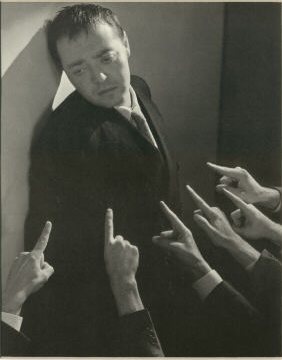
Anger and upset are very much a part of the human package. There's nothing wrong with having emotions. You can't NOT have them. We tend to work very hard at avoiding them, especially anger and upset. Or limit them, like there's a time and a place for them. Emotions don't tend to follow schedules. We grow up being discouraged to show our emotions (Don't you raise your voice to me! ...I'll give you something to cry about!) We're even discouraged as adults. (I can't talk to you when you're like this - treating someone who's angry like they're a crazy person.)If people allowed themselves and others the space to just let their emotions flow, they'd probably move through them faster and we'd all probably be a little bit happier. We'd also get to know each other a lot better and probably feel safer because of it.
Easier said than done. Especially if you're around people where there hasn't been any agreement made on how to handle emotional situations.
I have two rules that I personally have that I apply to any heated argument.
1) No hitting. No destruction of property.
2) No dirty tricks. (This could be anything from lying about what's really true for myself - No, I'm not upset.- to bringing up issues unrelated to the topic just to try to hurt the other person.)
I try to adhere to these rules as best I can and if the other person breaks them, all bets are off and I then have the option to get nasty.
My girlfriend and I are like any couple. We have lots of good times and an occasional rough spot that needs to be smoothed out with some conscious contact. These engagements are important to me, because this is where I really get to know her on a very intimate level. I also get to know her personal rules, usually through trial and error.
Things Not To Say Or Do In An Argument With My Girlfriend
- Do not equate her behavior to that of either of her parents
- Do not make a reference to her "very fine boo-tay."
- Do not talk like a duck.
- Do not make farting sounds (real or imitation)
- It's okay to leave the television on, but ignore it. Don't you even dare look at it. (Really best to just turn it off)
- No unscheduled performances of The Naked Weenie Dance.
I hope you find this helpful. As an artist, I think it's important to study not only how people handle upset, but how you handle upset. I also believe that the more you allow yourself to fully experience anger and pain, the more able you are to fully experience pleasure and love.
SOIREE DADA: We received a lot of positive feedback on our performance at Looptopia. Jeff Watt put together a small montage focusing in on one of my favorite pieces.
Brooke Bagnall from the sketch comedy group Blaire is competing in a contest to be an NPR host. Seems like a very un-NPR thing to do, however her entry is interesting and sounds just like the real deal. It just takes a second to register to vote.
Brooke Bagnall on Public Radio's Talent Quest
Easier said than done. Especially if you're around people where there hasn't been any agreement made on how to handle emotional situations.
I have two rules that I personally have that I apply to any heated argument.
1) No hitting. No destruction of property.
2) No dirty tricks. (This could be anything from lying about what's really true for myself - No, I'm not upset.- to bringing up issues unrelated to the topic just to try to hurt the other person.)
I try to adhere to these rules as best I can and if the other person breaks them, all bets are off and I then have the option to get nasty.
My girlfriend and I are like any couple. We have lots of good times and an occasional rough spot that needs to be smoothed out with some conscious contact. These engagements are important to me, because this is where I really get to know her on a very intimate level. I also get to know her personal rules, usually through trial and error.
Things Not To Say Or Do In An Argument With My Girlfriend
- Do not equate her behavior to that of either of her parents
- Do not make a reference to her "very fine boo-tay."
- Do not talk like a duck.
- Do not make farting sounds (real or imitation)
- It's okay to leave the television on, but ignore it. Don't you even dare look at it. (Really best to just turn it off)
- No unscheduled performances of The Naked Weenie Dance.
I hope you find this helpful. As an artist, I think it's important to study not only how people handle upset, but how you handle upset. I also believe that the more you allow yourself to fully experience anger and pain, the more able you are to fully experience pleasure and love.
SOIREE DADA: We received a lot of positive feedback on our performance at Looptopia. Jeff Watt put together a small montage focusing in on one of my favorite pieces.
Brooke Bagnall from the sketch comedy group Blaire is competing in a contest to be an NPR host. Seems like a very un-NPR thing to do, however her entry is interesting and sounds just like the real deal. It just takes a second to register to vote.
Brooke Bagnall on Public Radio's Talent Quest
Subscribe to:
Posts (Atom)