Tuesday, June 26, 2007

Larry Gelbart


Whatever you do, whatever the medium, don't just strive to entertain. Use your talent as you would a stun gun. Dazzle us.


If you don't recognize the name Larry Gelbart, well, ya' should. You have seen his work. He's been around the block several times and, as a writer, has left his thumbprint in a couple of different areas of note. He started in radio writing for the classic comedy Duffy's Tavern. He moved into the Golden Age of Television writing for Ceasar's Hour and sharing writing credits with the likes of Sid Ceasar, Woody Allen, Howard Morris, Mel Brooks, Carl Reiner, Selma Diamond and Neil Simon. In theater, he wrote Broadway favorites like; A Funny Thing Happened on the Way to the Forum, The Sly Fox and City of Angels. His films include Tootsie, Oh, God! and Movie Movie. He's probably best known for being a strong guiding force in bringing M*A*S*H to television as a producer and writer. This is a guy who, if asked "Would you like to live your life over, again?" I hope he declines and says, "Let that Janes kid take it for a ride."

At 75, he's still very sharp and savvy about show business and writing. He recently gave the commencement speech at UCLA. Here are highlights from that speech.

For the record, and with no desire to spoil your day: being young is no trick. We all start out that way. The real challenge in the years ahead will be your ability to stay young.

I'm talking about retaining -- make that clinging tenaciously -- to what is the very best about your youth: remaining creatively curious. Of having an itch that no amount of scratching can ever ease. Of being restless. Of being endlessly experimental. Of being less interested in knowing all the answers than in learning that it's impossible to ever know all of the questions.

...it is imperative to know what's preceded whatever efforts you have in mind that will constitute your own bodies of work. No crystal ball really works well unless it comes equipped with a rear view mirror. We all have an obligation to appreciate the legacy left behind by the founding fathers and the birthing mothers of the dramatic arts.

Such knowledge will broaden the range of your interests; such knowledge will add to the height of your standards.

Get to know your predecessors; they are your real competition, not the names that you find daily in Variety and in the Hollywood Reporter.

Get to know them all. From Aristophanes to Arbuckle. From Shakespeare to Chayefsky. From former émigrés to present day MBA's.

Get to know the sisters Gish; the brothers Warner; the brothers Mankewicz and certainly, the brothers Marx.

We, each of us, have to know the works of Larry and Curley, to say nothing of Moliere.

To those who argue that there is nothing new under the sun -- usually in defense of their own creative poverty -- there is a counter-argument that challenges that assumption.

That something is you. You are what is new.

Consider their criticism, by all means -- even a committee of one million monkeys, working together over an equal number of years, might eventually manage to produce a movie or a series or even a play, but use only what makes a solid, valid connection with your internal gyroscope. To put it more graphically: as often as you can, go with your gut.

...at the risk of burdening you with one moment more of sage advice, here are some final, hopefully helpful hints from my zip code in downtown Delphi:

Learn to defy conventional wisdom. Defy convention. Defy yourself.

Never mind working your head off. You'll soon learn how quickly it can grow back.

Whatever you do, whatever the medium, don't just strive to entertain. Use your talent as you would a stun gun. Dazzle us.

Remind us how to care. Remind us how to feel. And not just good. If your goal is to merely to make people feel all comfy and cozy, do a cooking show.

Shine your light into the darkest corners of our hearts and help us to remember our universal commonality.

Don't just add to the noise. We've had enough sequels and prequels. We don't need another movie that's based on another movie. Or one based on a ride. Or a game. Or, God help us, on a toy.

Do the first of something. The first of anything. Then, shred the recipe.

Beware of creative slam-dunks. Things you're able to do with the back of your hand are very often the only thing an audience might reward you with.

Be partial to projects that have a potential for failure. It always helps to doubt whether or not you can accomplish just what it is you had in mind. Discover how much adrenaline there is in risk. Failure is a far better teacher than success.

As the TV commercial so needlessly reminds us: Life comes at you fast. Just be sure that you're there when it happens. If being in the moment is a good idea, it's a far better one to be ahead of it.

While all things imaginative are in some sense autobiographical, try shuffling the deck now and then and tackling a subject -- or a world -- which you know absolutely nothing about.

Trust me, there is nothing like starting on a new project to give you a refresher course in humility.

You will find it a whole lot easier to express your opinions when someone else isn't paying for them.

Okay, it's your turn now. Your turn -- as the Reverend William Sloane Coffin put it -- "to go out and have a lover's quarrel with the world."

Thank you.


You can read the speech in its entirety HERE.


Monday, June 25, 2007

Thumbs Akimbo


Theatre Review
:
Siskel and Ebert Save Chicago

Written by Eric Thomas Roach

Directed by Scott Oken


God Guns and Gold

Written by Scott Oken

Directed by Jennifer Pompa

The Factory Theater at The Prop Theater


One thing I always tell my writing students is not to write characters that are well-known celebrities or politicians. There's a few reasons for this. One - It's lazy. Usually what they come up with are pale imitations of one-note caricatures already popularized by SNL or MadTV. It keeps them from digging a little deeper and developing original characters. Two - it saddles an actor with having to create and sustain a convincing portrayal. Three- the audience is more likely to be focused on the success or failure of the portrayal than on the story being told.


So, the good news about Siskel and Ebert Save Chicago is that this isn't much of a problem. Scott Pasko and Chas Vrba do an excellent job at giving life to Siskel and Ebert, respectively. Together, they effectively recreate that Holmes and Watson chemistry of the originals. The play is populated with Chicago celebrities with hit or miss results, mostly hits. The twenty cast members do a rather remarkable job of blasting us through the Chicago landscape like a Trolley Tour Guide hopped up on goofballs.


Where the production falters is in a lack of confidence in the script and story. The script itself richochets all over the place with segments that do absolutely nothing to forward the story - for example, a commercial for dental dams comes out of nowhere, isn't funny enough to stand on its own and doesn't add anything. Some scenes are done with huge vaudevillian strokes, including rimshots, harkening Abbott and Costello routines.


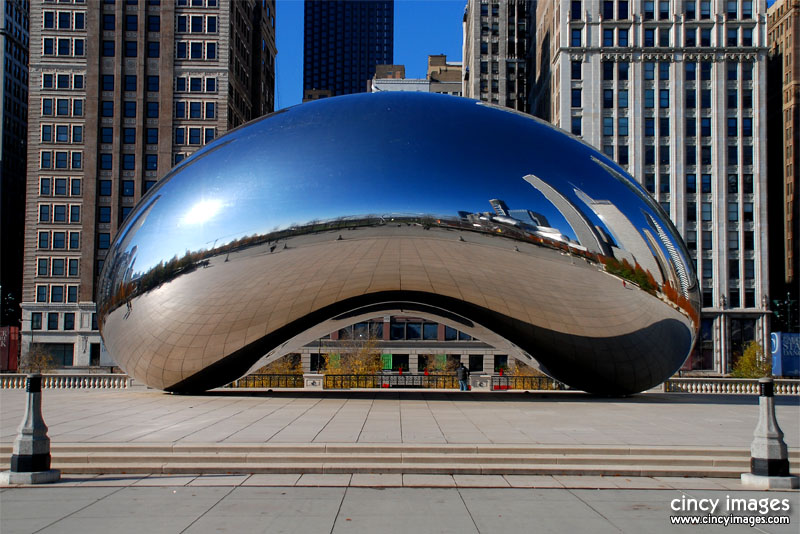
The play opens with a very slick video-taped Bond movie credits sequence with Siskel and Ebert filling in for Bond and giant, sexy silhouetted models dancing about Chicago landmarks, like The Bean. If the rest of the production and story had embraced this hybrid with deadpan seriousness instead of splintering off into multiple styles and storylines desperately seeking laughs, then I think the show would have been more successful. There are beaucoup movie references, mostly in the form of quotes, and, for some reason, a lift from the play Rosencrantz and Guildenstern are Dead. The only connection I can see to that is that the two characters who perform it later die offstage. Again, one of many strays way too far from the concept of Bond meets Film Critics.


As it is, it plays a lot like a company Christmas party where the employees do a skit making fun of their bosses. In this case, the company is the City of Chicago and the bosses are all the local celebrities. And the skit goes on way too long. Some of the strongest moments come from Siskel and Ebert's relationship, but the play doesn't have the courage to mine that. It just swings crazily from joke to joke. Siskel has a nice monologue at the end about what it means to review films, to be a teacher to others and to be a student of the films they watch. I would like to have seen more of that. Instead of off-the-cuff rattling of movie quotes in their dialogue, I would like to have seen them use what they learned from films to combat the villains.


Roger Ebert was there on opening night. It was very amazingly cool of him to just show up unnannounced. The play affectionately and respectfully portrays Gene and Roger, albeit younger, healthier versions of them. He gave the cast a thumbs up from his car as he drove off. Oprah, on the other hand, may want to skip this for another viewing of The Color Purple.


The Factory Theater does an interesting thing by opening the show with a ten-minute serial called God Guns and Gold. It's over-the-top camp fits in the Siskel and Ebert Save Chicago mold.It was fun and it was also brief. The plan, apparently, is to do parts two and three over the course of the Siskel and Ebert run. I'm not exactly sure how that's supposed to work. I can't imagine someone paying to see Siskel and Ebert Save Chicago two more times just to see how the ten-minute serial turns out. Kudos for trying something different, though.

Sunday, June 24, 2007

The Wounded

http://www.comcast.net/news/health/index.jsp?cat=HEALTHWELLNESS&fn=/2007/06/24/697808.html

Gov't Struggles to Care for Wounded GI's

By MARILYNN MARCHIONE, AP Medical Writer

More than 800 of them have lost an arm, a leg, fingers or toes. More than 100 are blind. Dozens need tubes and machines to keep them alive. Hundreds are disfigured by burns, and thousands have brain injuries and mangled minds.

These are America's war wounded, a toll that has received less attention than the 3,500 troops killed in Iraq. Depending on how you count them, they number between 35,000 and 53,000.

More of them are coming home, with injuries of a scope and magnitude the government did not predict and is now struggling to treat.

"If we left Iraq tomorrow, we would have the legacy of all these people for many years to come," said Dr. Jeffrey Drazen, editor-in-chief of the New England Journal of Medicine and an adviser to the U.S. Department of Veterans Affairs. "The military simply wasn't prepared for its own success" at keeping severely wounded soldiers alive, he said.

Survival rates today are even higher than the record levels set early in the war, thanks to body armor and better care. For every American soldier or Marine killed in Iraq, 15 others have survived illness or injury there.

Unlike previous wars, few of them have been shot. The signature weapon of this war _ the improvised explosive device, or IED _ has left a signature wound: traumatic brain injury.

Soldiers hit in the head or knocked out by blasts _ "getting your bell rung" is the military euphemism _ sometimes have no visible wounds but a fog of war in their minds. They can be addled, irritable, depressed and unaware they are impaired.

Only an estimated 2,000 cases of brain injury have been treated, but doctors think many less obvious cases have gone undetected. One small study found that more than half of one group of wounded troops arriving at Walter Reed Army Medical Center had brain injuries. Around the nation, a new effort is under way to check every returning man and woman for this possibility.

Some of those on active duty may have subtle brain damage that was missed when they were treated for more visible wounds. Half of those wounded in action returned to duty within 72 hours _ before some brain injuries may have been apparent. The military just adopted new procedures to spot these cases, too.

Back home, concerns grow about care. The Walter Reed hospital scandal and problems with some VA nursing homes have led Republicans and Democrats to call for better care for this new crop of veterans.

A lucky few get Cadillac care at one of the VA's four polytrauma centers, where the most complex wounds are treated with state-of-the-art techniques and whiz-bang devices like "power knee" or "smart ankle" prosthetics. Others battle bureaucracy to see doctors or get basic benefits in less ideal settings.

Mental health problems loom large. More than a third of troops received psychological counseling shortly after returning from Iraq, and a third of those were diagnosed with a problem, a recent Pentagon study found. The government plans to add 200 psychologists and social workers to help treat post-traumatic stress disorder and other issues.

No one knows what the ultimate cost will be. Harvard University economist Linda Bilmes estimates the lifetime health-care tab for these troops will be $250 billion to $650 billion _ a wide range but a huge sum no matter how you slice it.

Who are the wounded?

Lee Jones, 24, of Lumberton, N.C., was severely burned on the face, hands, feet and legs when his Humvee was hit with an IED two years ago. A partial amputee with speech and other problems from a severe brain injury, he now does work therapy delivering mail at a VA hospital and tries to re-establish life in a nearby apartment with a wife and baby daughter.

Marine Cpl. Joshua Pitcher, 22, from upstate New York, is a Purple Heart recipient who returned to Iraq after he was shot in 2005. Half of his skull was removed to allow his brain to swell as he now recovers from a brain injury and shrapnel wounds from a grenade blast in February.

Maj. Thomas Deierlein, 39, is a New York City marketing executive who served five years after graduating from West Point. Twelve years later, called up as a reservist, he nearly died of bullet wounds that shattered his pelvis, leaving him with a colostomy and learning to walk again.

Joseph "Jay" Briseno, 24, of Manassas Park, Va., was shot in the back of the neck by an Iraqi in the early months of the war. One of the most severely wounded, he is now a quadriplegic, on a breathing machine, blind and unable to speak, but aware of what has happened to him.

"The mistake in Vietnam was, we hid the injured away from folks so they didn't get to tell their stories. Now it's important that we let them tell their stories to the public," said Dr. Steven Scott, director of the Polytrauma Rehabilitation Center at the Tampa VA Medical Center in Florida.

Counting the wounded can be contentious. Earlier this year, the Department of Defense changed how it tallies war-related injuries and illness, dropping those not needing air transport to a military hospital from the bottom-line total.

Bilmes, the economist, thinks this is disingenuous.

"An accident that happens while they're there is a cost of war, particularly when you factor in the length of deployment" and injury-inducing conditions like very hot weather, carrying heavy packs, and more vehicle accidents because it is not safe to walk anywhere, she said.

As of June 2, 25,830 troops had been wounded in action. Of these, 7,675 needed airlifts to military hospitals and the rest were treated and remained in Iraq.

There were another 27,103 non-battle-related air transports. Of those, 7,188 had injuries. Most occurred from vehicle accidents, training or work-related accidents. Ten percent were sports injuries, said Dr. Michael Kilpatrick, who tracks this information for the Defense Department.

Nearly 20,000 of these "non-hostile" airlifts were for illnesses or medical issues: general symptoms like fever or pain needing tests or evaluation; back problems; psychological problems adjusting to being in a war zone; "affective psychoses" (not able to function or care for themselves); neuroses; respiratory or chest symptoms; depression; head and neck problems (including traumatic brain injury); epilepsy; infections, and muscle pulls and strains.

"I don't want to try to say these are not war-related. Being in the military is a very physically demanding job," Kilpatrick said.

For stress-related problems, the military tries "three hots and a cot" _ warm meals and a chance to sleep. Most of the time it works and troops return to their unit, Kilpatrick said.

Of the troops air evacuated to the military hospital in Landstuhl, Germany, 20 percent return to Iraq and 80 percent go back to the United States for more care or disability discharge.

Of the half-million troops who have left active duty and are eligible for VA health care, about one-third have sought it. The most complicated cases end up at one of the four polytrauma centers, in Tampa, Fla.; Richmond, Va.; Palo Alto, Calif.; and Minneapolis.

These were formed after doctors realized they were missing problems _ amputees who were confused and unable to put on their prosthetics because of undiagnosed brain injuries, and guys who could remember their therapy dog's name but not their doctor's, or who could carry on a conversation but not recall what they had for breakfast.

Troops at these hospitals have an average of six major impairments and 10 specialists treating them.

"The important thing to realize is you could have all of them at once" _ trouble speaking, seeing, walking, hearing, etc., Scott said.

Most of these injuries are caused by IED blasts, which send a pressurized air wave through delicate tissues like the brain, sometimes send it smacking against the inside of the skull and shearing fragile nerve connections that control speech, vision, reasoning, memory and other functions. Lungs, eardrums, spinal cords _ virtually anything _ can be damaged by the pressure wave. Injuries also come from collapsing buildings, flying debris, heat, burns or inhaled gases and vapors.

"Many of these you can't see on an X-ray," such as glass shards that can cause internal bleeding, Scott said.

In prior wars, one of every five to seven troops surviving a war-related wound had a traumatic brain injury, the military estimates. It's much higher in this war.

A pilot project at Walter Reed in 2003 to screen 155 patients returning from Iraq found that 62 percent had a brain injury.

"This is a very rapidly evolving area as a disease," with no screening test, agreed-upon set of symptoms for diagnosis, or even a billing code, said Kilpatrick, the military doctor.

Much needs to be learned about how to treat these injuries, he said, but credited the military medical staff for having the chance.

"It's just amazing to me every day when I look at these numbers," he said. "The good news is that the majority of these people who become ill or injured ... are going to survive and are going to be able to return either to the military or to civilian life and be productive."

___

On the Net:

Government casualty data: http://siadapp.dmdc.osd.mil/personnel/CASUALTY/castop.htm

State breakdowns: http://siadapp.dmdc.osd.mil/personnel/CASUALTY/STATE_OEF_OIF.pdf

Defense and Veterans Brain Injury Center: http://www.dvbic.org

Harvard economist report: http://ksgnotes1.harvard.edu/Research/wpaper.nsf/RWP/RWP07-001

Department of Veterans Affairs: http://www.va.gov/

Department of Defense: http://www.defenselink.mil/

Saturday, June 23, 2007

Saturday Morning Cartoons!

Foghorn Leghorn - One of my favorites growing up was The Bugs Bunny-Road Runner Show. It was a Saturday morning cavalcade of classic Warner Brothers cartoons. While not my favorite, I've always had a soft spot for Foghorn Leghorn. The character was based radio comedian Kenny Delmar's character, Senator Beauregard Claghorn. He was a regular on The Fred Allen Show and even made a film centered around the senator. You can get a sample of his southern speechifying in the movie It's A Joke, Son! by clicking HERE.


This is one of my favorite cartoons where Foghorn is pursued by Prissy the chicken looking for a husband. It features a very inventive Rube Goldberg-style trap at the end.


While Foghorn is certainly a great character, I don't think the dog makes a very good nemesis. He's too likable. I don't want to see him get hurt!


ROBOWRITERS ASSIGNMENT - I meant to post this yesterday, but didn't get it in time. Chris Othic filled in for me while I was at Wait, Wait...Don't Tell Me! Comes pretty much straight from John Vorhaus' book The Comic Toolbox. John Vorhaus' book is to skecth comedy writing as Viola Spolin's book is to improvisational theater. It's probably the best book out there on sketch comedy writing, even though the references are a little dated and he's a little too fixated on The Golden Girls. Creepy in a finding your mom sexy kind of way.

Create a list of comic characters based on the following categories:

Comic Perspective: A character’s unique way of looking at the world, which differs in a clear and substantial way from “normal world view.

Exaggeration: Takes comic perspective and pushes it way out there to the end of the line.

Flaws: Failings or negative qualities within a person’s attributes or aspects. They create emotional distance between the character and viewer so viewer can safely laugh at them. Whoever that guy is, he’s nothing like me.

Humanity: Qualities of character that build a bridge between character and the audience so the audience will care. The sum of a character’s positive human qualities that inspire either sympathy or empathy or both. I like him, he’s like me.


Choose one of the characters you created and do a ten minute free writing exercise in the voice of the character.

Create a scene based around your character. Use the free writing exercise as a jumping off point if you wish. The scene can be anything you like (clash of context, inappropriate response, fish out of water, etc.) but make your comic character the focus of scene.

Friday, June 22, 2007

Tell Everybody!

Theatre Review: Wait, Wait... Don't Tell Me!
Hosted by Peter Sagal
Directed and Produced by Mike Danforth
Thursdays at 7:30pm
Chase Auditorium


I debated whether or not to call this a theatre review. It's the recording of a radio show. But it's in a theater, they charge $20, they have programs, they sell hats and they have boffo lighting effects.


Boom...THEATRE!


There are very few reliable sources for getting a regular high quality satire fix. There's The Daily Show, The Colbert Report, The Onion and Wait, Wait... Don't Tell Me. I think the success of these shows (and newspaper) lie in the assumption that the audience is just as smart as the creators. And for the many of us frustrated by the general quality of our news outlets, these guys all seem like they're telling me the truth while also making me laugh.


For those few that are unfamiliar, WWDTM is NPR's "oddly informative weekly news quiz." It helps, but you don't have to be up on the news to get the jokes. Some of the best humor comes out of the host incredulously explaining the full news stories to us. While the other satire sources named above all deal in delivering the fake news, WWDTM delivers us a fake quiz show. It's really just an excuse to allow Peter Sagal and the panelists an opportunity to riff on today's headlines. The panelists this night were; Luke Burbank, Kyrie O'Connor and Charlie Pierce. Luke was very laid back and had a nice, unassuming quirky humor about him. Kyrie was wonderfully offbeat and reminded me of all the best qualities of Elaine May. Charlie Pierce was the token curmudgeon.


How this show is executed is really an amazing feat of comic dexterity. Peter Segal guides us through all the questions and clearly has a good two or three jokes up his sleeve about the news items. The panelists ad lib responses, occasionally inadvertently stealing what Peter may have had planned. Which is fine. It seems like an ego-less show where the laughs are more important than who gets them. This good-natured delivery helps sooth the pain of the current events being highlighted. If we weren't laughing, we'd be crying.


Michael Moore was the special guest in a segment called It's Not My Job. In it, Peter asked him questions about proper etiquette. Everyone on the stage clearly respects, if not reveres Michael Moore. His good-humored, self-effacing Midwestern demeanor fit right in. Apparently, his new film, Sicko, was having a premiere at Piper's Alley. He opted to be at the taping of WWDTM, because, as he said, he's already seen the movie. He's also clearly a fan of the show


This review would not be complete without mentioning the brilliant, understated Carl Kasell. His voice is one of the most distinct and familiar news anchor voices ever. And, he's very funny. He takes his news-inspired limericks as seriously as if he were delivering bad news about a hurricane.


Wait, Wait... Don't Tell Me airs locally on WBEZ, 91.5 FM, on Saturdays at 10am and 9pm. But if you ever have a Thursday evening free, check them out live. It's worth it. In this messed up world, you might think there aren't any sane people left. Well, there aren't, but this comes close. Enough to make you put down those sleeping pills and rope for another week.

Thursday, June 21, 2007

Top 100 of Anything

I'm really not all that interested in anyone's top list of 100 whatevers.


They're usually very subjective and suspect in their genesis. They tend to have more to do with a cheap publicity method, or el cheap-o excuse for a show (VH-1) than an actually well thought out justified list.


The American Film Institute came out with a revised list of The Top 100 Films of all time in honor of that list's 10th anniversary (Hunh? - the anniversary of a list?). Somehow, AFI narrowed the field down to 400 and then anyone giving them their e-mail address could vote for the top 100.


If this sort of crap test gets people to check out the works of Orson Welles, Charlie Chaplin, Buster Keaton and Billy Wilder, then, okay. I'll complain a little less. There's only one film out of the 100 I haven't seen (Sunrise, anyone?).


Far more interesting to me, are the worst films ever made. Where's the Top 100 for that, AFI? There's only one film that ever had me hopping out of my seat and storming out of the theater. Sgt. Pepper's Lonely Hearts Club Band starring Peter Frampton and The BeeGees. What a big stinkeroo! I still recoil in horror if I run across it flipping channels.


Here's a guy after my own heart. Here's a guy who dove deeply in the direct-to-DVD pile at Blockbuster and came up with a few scenes from the worst films ever made. Lots of fun!


ROBOWRITERS TONIGHT AT THE UPTOWN WRITER'S SPACE AT 6:30PM!

SIDENOTE: President Bush says he's opposed to stem cell research because it's not right to destroy lives to save lives. Given Iraq and his war on the word "terror," that's a wee bit hypocritical, doncha think?

Wednesday, June 20, 2007

Rants

Yesterday, I taught my Intro to Comedy Writing class at Second City. There are a few things very unusual about this class.

- It's from 4pm - 7pm. Most classes are 7pm - 10pm or on the weekend. This is my first time teaching this time slot. I love it. I get done with enough time to go home and spend some quality time with my girlfriend.

- It's a small class. Most Intro classes are around the 15 mark. We have five, so there's no hiding out. Everybody writes and everybody reads. I don't have to rush through any exercises and there's plenty of time to debrief and check-in with the students.

- Everyone is in their 30's and 40's. And I'm not the oldest! I love having a wide range of ages and types in a class, but there's something refreshing about not having to explain a lot of references or the kinds of points-of-view that only come with, dare I say it...maturity.

Yesterday, we did a brainstorming exercise of writing a list of ten things that piss you off. The exercise leads to the students ranting on paper about a topic. For many of them, this is their first taste of using strong emotion as a tool as well as simply being heard through their writing. The list is just a jumping off point for some monologue and character work, but it's a tremendous amount of fun to hear. Most everything listed I could relate to and those that I couldn't, I still enjoyed because of the irritation in the voice of the writer. I'm not exactly sure why a server calling a group of people in a restaurant "folks" is a bone of contention, but I sure enjoyed hearing about it!

I never do the exercises along with the class because I would too easily make it about me and not facilitate the process properly. But after hearing them today, I decided to do it myself. Now, keep in mind, this is not a top ten list. It's a brainstorming list done with a time consideration. Its the first ten things that come to mind.


TEN THINGS THAT PISS ME OFF

1 - Rude drivers who lay on the horn at intersections. It's not helping.

2 - People who are consistently late. To the point where you can count on them being late. You're holding things up and I don't have the time to waste.

3 - People who talk in movie theaters AND at live theater! Where the hell do you think you are? I didn't pay my money to hear YOUR dialogue.

4 - Panhandlers who hit me up for money when I'm flat-assed broke. It's like a cat who gets in your face when you're allergic or people who - having never done so in their lives - suddenly slap you on the back when you have a sunburn.

5 - Being with a group of people at a restaurant where everyone has pitched in on the bill and it's ridiculously short. C'mon, people, pony up! You - the couple - you BOTH need to pitch in. You're not eating for one. And all you losers, it's not the price in the menu. It's that price plus your drink plus tax plus a 20% tip!

6 - Arrogant ignorant stubbornness (Looking in your direction, Mr. President).

7 - Politicians and celebrities who are more wrapped up in looks, perceptions, spins, focus groups and polls. Whatever happened to just being honest and talking to people? We're not all idiots.

8 - Insurance companies. They're like the mob pinching you for protection money. And if you actually need their services, they squeeze harder.

9 - Boob jobs and anything involving a "lift" or a "tuck." And, for Pete's sake, let your pubes grow back in! It's like that weird ultra-tweezed or shaved eye-brow look, but on your crotch.

10 - Unnecessarily poor service. I get it, chubby slow lady who continues her conversation with a co-worker and never makes eye contact with me at the post office on Broadway near Lawrence. Your job sucks. The awful fluorescent lighting and that funky smell which might have more to do with you than the environment there. I'd hate it, too. But it's not my fault and all I want is a frickin' money order.

Whew! I feel better. Doesn't take long. I highly recommend it. You can write and post yours in the comment section. I'd love to read it.